The Handshake That Cost Me a Favorite Author: On Meeting the People Who Wrote Your Childhood
There's a particular species of regret that doesn't have a name yet, and I'd like to propose one: the cost of the handshake.
Last spring I waited in a folding-chair line at a bookstore outside Nashville for an hour and a half to meet an author I'd been reading since I was twelve. His novels got me through a stretch of years I don't like talking about. I'd built him, brick by brick, out of dust jacket photos and interview clips — a wry, generous man who'd understand exactly why his third book mattered to a kid in Ohio.
The man at the signing table was tired. That's it. That's the whole story. He was tired, his Sharpie was dying, and there was a publicist hovering with a schedule. He asked my name, spelled it wrong on the dedication, and handed the book back with a nod that lasted maybe a second. Ninety minutes of line for one second of nod.
The Version in Your Head Has a Better Publicist
Here's the thing nobody wants to admit at the fan convention: the relationship you have with a creator is almost entirely your own invention. You've taken a few hundred pages, a couple of talk show appearances, and a podcast clip, and from those raw materials you've constructed a person. And because you built them, they're perfect. They share your sense of humor. They'd get you.
That's not delusion. That's just what happens when art works. The whole transaction of loving a book or a show is that you meet the creator halfway — you finish the thing they started. The trouble is that the finished product lives in your imagination, and the actual human lives in Los Angeles with a bad back and a signing schedule.
Reality Has Terrible Timing
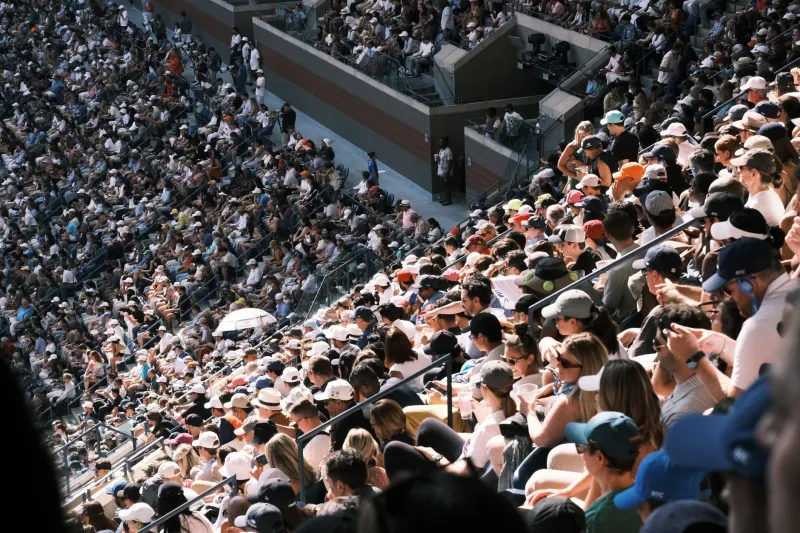
The encounter itself is almost always structurally doomed. You get maybe thirty seconds. You're one of four hundred people that day. The person you're meeting has said the same sentence to strangers since nine a.m. And you — you're supposed to compress fifteen years of gratitude into a moment that fits between a book flap and a photo op.
No version of that goes well. Either you freeze and say nothing, or you over-share and watch their eyes flick to the line behind you, or — worst of the bunch — you get exactly the pleasant, professional, forgettable exchange you'd expect from any stranger, and the spell just... breaks. Not dramatically. It just quietly stops being true that this person knew you through their work.
I've watched it happen to friends with musicians in Austin, with a late-night host in New York, with an actor at a horror convention in Ohio who reportedly charged forty dollars for the privilege. The pattern is always the same: the hero doesn't do anything wrong. They're just a person. And a person is the one thing your hero could never afford to be.
The Case for Staying Home
So here's my heretical take, offered as someone who paid for the lesson: the best encounters with your heroes are the ones that never happen.
Keep the parasocial relationship. It's not shameful — it's how art has always worked. Mark Twain didn't owe his readers a handshake either. The imaginary version of your favorite creator is a collaboration between you and the work, and it belongs to you in a way no autograph ever will. A signed book is a receipt. The version in your head is the actual relationship.
If you must go — and sometimes you must, I understand — go with modest aims. Don't try to be memorable. Don't pitch. Say thank you, mean it, and leave. Let them be tired. Let them be human in the smallest possible dose. Protect the memory by keeping the exposure brief, the way you'd handle a photograph you don't want to overexpose.
And if you catch yourself in line feeling that flutter of this is going to complete something — take a breath. It won't. The thing was already complete. It was complete the first night you stayed up too late reading, back when the author was just a name on a spine and a voice in your head, and honestly, that voice was having a much better day.